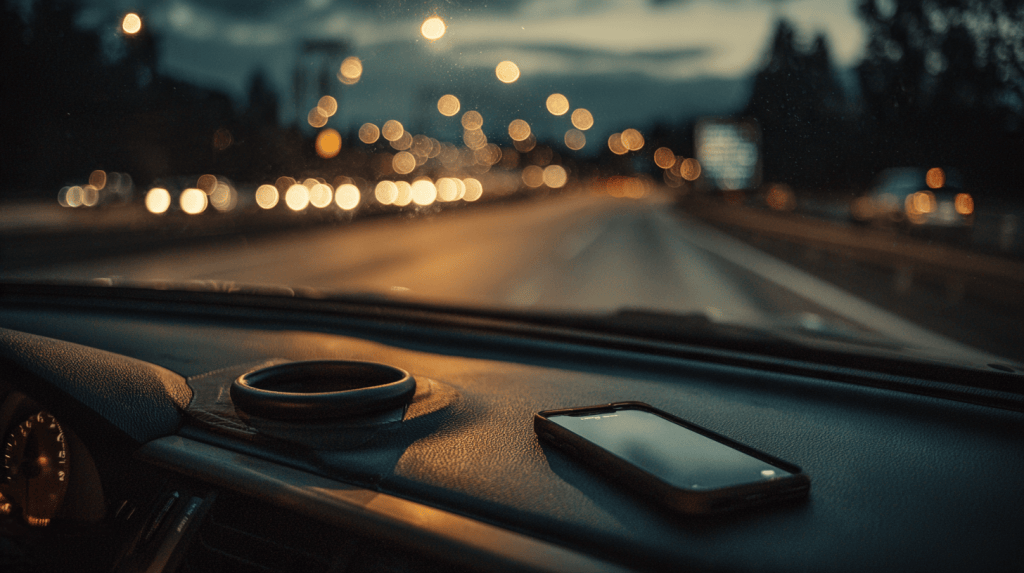
It was a Wednesday evening, and I was driving to Columbus, Texas. Wednesday nights in Columbus had become a ritual. This was my sixth in a row.
That’s when the song came on.
“Windfall” by Son Volt.
I’ve heard it a hundred times. I own it. I’ve played it on purpose, on repeat, more nights than I’d admit to a doctor. It carried me through the hardest stretch of my life. There’s a lyric in it, May the wind take your troubles away, and I clung to that song, and I clung to that lyric.
This time I didn’t play it. The radio did.
And it found me.
I should say up front that I’m adjusted now. Relatively. That’s a relative term. But I feel adjusted. I have a townhouse, a routine, and people who would notice if I went missing.
That last part matters. You’ll see why.
I can’t explain what that song is to me. Plenty of people have a song. This is different. Every line of it has a picture attached. Not a feeling. A picture. Something that actually happened to me. A road. A window. A light on in a house that wasn’t mine anymore.
It’s the song that walked me through the bottom of the valley. I didn’t know that at the time. At the time, it just brought me comfort. Amazing comfort. It was my Wilson, the volleyball Tom Hanks talked to in Cast Away.
So there I was on Interstate 10, six years later, passing the Pilot truck stop somewhere between Brookshire and Sealy, and the song pulled me back down there so fast I almost had to pull over.
I’d forgotten the feeling.
That’s the strange part. I never forgot what happened. I forgot what it felt like. And I didn’t realize, back then, how low I actually was.
You can’t measure a hole from the inside.
So I picked up my phone, opened the voice recorder, and started talking. About something I had never told a single living soul.
What I said is this chapter.
Here’s the thing nobody tells you about your life falling apart.
Everybody else’s doesn’t.
My marriage ended after thirty-one years. The house, gone. The belongings and keepsakes, gone. Friends, gone. Everything I thought was permanent turned out to be a lease.
And the next morning, everybody went to work.
They mowed their lawns. They posted pictures of their kids at the lake. They argued about the Texans. The coffee place still opened at six. I wasn’t there to see it, but I knew exactly what it looked like.
I don’t know what I expected. A parade in reverse, maybe. Some kind of announcement.
What I got was nothing.
Not cruelty. Nobody was cruel. Cruelty would have at least been attention.
It was just nothing.
Once in a while, a text. “Hope you’re doing ok.” The kind you answer with a thumbs-up so the other person can feel good about sending it.
The exception was two people, Gary and Jimmy. In this book, I call Gary “Matt.” You’ll meet him later. He was the one who really kept an eye on me, quietly, from a distance, like a man watching a pot he doesn’t trust.
Everyone else went on living.
I’ve thought a lot about why. And I’ll be honest, because this whole book is me trying to be honest.
Maybe I wasn’t that kind to people.
Maybe I was the guy who never called either. Maybe I was so busy being married, and selling, and traveling, and being fine, that I never built the kind of friendships where people notice you’re gone.
You reap what you sow. I’d sown a lot of “we should get together sometime.”
The harvest was light.
So I started a game.
I didn’t call it that. I didn’t call it anything. But looking back, that’s what it was.
How far could I disappear before anybody noticed?
The way I played it was, I drove.
One night around ten o’clock, I got in the car and headed east. No bag, no plan, and nobody to tell.
I drove straight through Texas and half of Louisiana before I stopped for gas. Past Lafayette, past Breaux Bridge, and a few miles later a green sign came up out of the dark: Exit 115, Cecilia, Henderson. It was the last exit before the long bridge over the Atchafalaya Basin, and sitting right off the ramp was the Bayou Belle, a low-level truck stop with an even lower-level casino attached.
It was about two in the morning. I filled up the car and went inside.
The air was thick with cheap carpet cleaner, ammonia, and cigarette smoke, almost dripping from the walls. It reminded me of the smoking rooms in foreign airports, those glass boxes sponsored by Camel, with thirty people shoulder to shoulder, not talking, just smoking. I know, because I’ve been one of those thirty. Those rooms are absolutely filthy.
The Bayou Belle was that same room without the boarding passes. The people in an airport smoking room are killing an hour before a flight. These people weren’t going anywhere.
They had made extremely bad choices, over and over, their whole lives. I’m not a detective, and none of them told me so. I didn’t need either one. The damage was right there, scorched into their bodies and their souls.
There was a lady in one of those motorized chairs. A Rascal, I think, is the brand. She was severely obese, spilling over the sides of that chair, and her face was so wrinkled that if she ever got a facelift, they could make a pair of boots out of the extra skin. She was pulling an oxygen tank on a little trailer, a yellowed plastic tube looped behind her ears and into both nostrils. She was chain-smoking with one hand and slapping DEAL with the other, again and again, oblivious to anyone in that casino or on planet Earth.
At the next machine sat a black man, far too young to be a member of this club. But there he was. He wore a sleeveless undershirt that had been white once and a Saints cap with salt lines climbing the crown like rings on a tree. His fingernails were long and yellow. He was eating boudin out of a paper tray and wiping his fingers on his jeans between hands. He’d been on that stool so long it had taken his shape.
And now I was right in there with them. Welcome to the club, big-shot world traveler, deal maker.
I felt like a stranger, and at the same time, quite at home. Nobody noticed me.
I sat down at a video poker machine. The screen had a yellow film on it, and the picture was slightly out of focus. The glass was greasy, like someone had finished a sloppy joe and wiped their hands on it. The green around the cards, bright once, had gone yellowish, because the screen was burned out.
After losing about $100 on that rigged machine, I walked back out to my car. It was still running. Keys in, doors unlocked.
It was a quarter to three. I kept driving east.
I hit New Orleans around a quarter to five, the city still dark, the Superdome lit up off to my right like it was waiting on somebody. I knew that skyline. I’d spent years coming here to sell. Big meetings in hotel conference rooms off Poydras. Steak dinners that ran past midnight. Handshakes in the lobby that turned into the best quarters I ever had. I’d walked out of this city more than once feeling like the smartest man in Louisiana.
This time I didn’t stop. I didn’t even slow down. I just drove right through it, the whole city sliding past my window like it belonged to somebody else.
Across the Twin Spans, into Mississippi. Bay St. Louis, Gulfport, Biloxi, all asleep. By the time I reached Exit 69, Moss Point, Pascagoula, the sky ahead of me had started to go from black to gray. It was about six-thirty. Alabama was six miles up the road.
I pulled off at the Waffle House, went in, and got a cup of coffee to go. I sat in the car with it in the parking lot, engine running, and had a conversation with myself. It was short.
You can go home, or you can keep driving.
Nobody was waiting at home.
So I put the car in gear and pulled around back, to where the truckers park. I was a little car in a sea of big rigs, all of them idling, all of them humming, their running lights still on. I leaned the seat back as far as it would go, which wasn’t far enough, and tried to grab some sleep.
It’s not sleep. It’s a series of short negotiations with a seat that doesn’t recline far enough, and with eighteen-wheelers breathing next to you.
Somehow I got two or three hours of it anyway. When I opened my eyes, the sun was full up and half the rigs were gone. And I felt fully awake. More awake than I’d felt in weeks.
I kept driving.
Into Alabama, through Mobile, and then I turned north, away from the Gulf, toward Georgia. My phone sat in the cup holder.
No calls. No texts. Nothing.
I kept checking it anyway. That’s the part that embarrasses me now.
I wasn’t hiding. I was waiting.
Somewhere in the pine trees of south Alabama, I stopped for gas. A little station with two pumps and a hand-lettered sign for boiled peanuts. At the other pump, an older man was filling up a pickup that was older than I was. Faded paint, a dent in the tailgate. But he didn’t match the truck. Pressed khakis, a starched button-down, good boots, a gold watch, and a crimson Alabama ball cap. A gentleman farmer, the kind who owns the land everybody else farms. He drove that old truck because he liked it. You could tell by looking at him he could have bought five hundred of them. He looked at my Texas plates.
“You’re a long way from home, son.”
“Yes, sir.” I nodded at his truck. “That thing’s got some miles on it.”
He patted the fender like it was an old dog. “Three hundred and eighty-five thousand.”
Then he looked back at me. “Where you headed?”
I thought about it longer than a man should have to think about that question.
“Georgia, I guess.”
He nodded, like that was a perfectly reasonable answer. “Well. Georgia’ll be there.” He hung up the nozzle, touched the brim of his Alabama cap, and drove off.
I watched his pickup pull back onto the highway, and it hit me. That was the first real conversation I’d had in thirty-six hours. A handful of lines, at a gas pump, with a man whose name I’d never know.
I stood there with the pump running and did the math.
I’m not home. And I’m not just not home. I’m three states away.
In Texas, that’s a big deal. People in Texas don’t go three states away. Texas is three states away.
Nobody knew. Not even the man at the next pump, and he’d asked.
I had the conversation with myself again.
Go home, or go into Georgia.
I went to Georgia.
North through Montgomery, then east, the interstate giving way to a two-lane highway through little towns with a Dollar General, a Baptist church, and not much else. Billboards for personal injury lawyers and Jesus, sometimes on the same sign. Then a bridge over the Chattahoochee River, and a sign that said Welcome to Georgia.
I crossed the river, and I lost an hour. I’d driven far enough to reach the next time zone.
Columbus, Georgia.
I’d been here before, back when my life was still in one piece.
It was 2017. Lynn and I were living in Chicago, and our son Cory was stationed here at Fort Benning. He was a young officer on his way up, and he was finishing Airborne School. Three weeks of running, jumping, and getting yelled at, then five jumps out of a perfectly good airplane. He called us after his first jump, talking so fast I could barely keep up. I hadn’t heard him that excited since he was a kid on Christmas morning.
Of course we were going to be there.
Lynn and I decided to drive and make a little trip out of it. We left Chicago early, headed south through Indiana and Kentucky, and by evening we were winding up into the Smoky Mountains to spend the night in Gatlinburg. We walked the Parkway with all the other tourists, past the pancake houses, the fudge shops, and the moonshine tasting rooms, and sat down to a big dinner with the mountains going dark behind us. It was the kind of night married people have when things are good. We didn’t know it was one of the last.
The next morning we came down out of the mountains and drove the rest of the way to Columbus.
Cory’s friend Richie came in too. Richie was a buddy Cory had met online, racing Formula 1 on the computer. It turned out they had more in common than racing. Richie was Army too. The two of them had logged more laps together than most real drivers, trash-talking each other through headsets from opposite ends of the country. And here he was in Georgia, in person, to watch his racing partner get his wings. It felt like a reunion before anything had even happened.
The graduation was on a big open field on post, with those old 250-foot jump towers standing over everything like steel giraffes. Rows of young soldiers in formation, boots shined, chins up. Then it was time to pin on the wings.
In the Army, not just anybody gets to pin you. It has to be a soldier, active or retired, who outranks you. Richie outranked Cory. So Cory asked Richie. Lynn and I stood a few feet back while Richie lined the wings up over Cory’s heart and pressed them on. A guy Cory had met racing cars on a computer, pinning jump wings on my son in Georgia. None of us saw that coming the first time they logged on.
Cory grinned, then looked past Richie and found me, and for a second he was eight years old again, standing on the diving board, asking me to watch.
I watched.
That night we went out to celebrate. Uptown Columbus, down on Broadway, brick buildings and string lights and the river somewhere behind them. Cory had it all mapped out. First stop, a place with a long wooden bar where the bartender knew him by name. Second stop, somewhere louder. By the third, Lynn gave me a kiss, told us to behave ourselves, and headed back to the hotel.
We did not behave ourselves.
Richie, Cory, and I kept going. Cory steered us from bar to bar like he was leading a patrol, introducing us to other lieutenants and telling everyone within earshot that his mom and dad had come all the way from Chicago. At some point Richie got talked into a round of something blue that nobody could identify. At some point I bought a round for a table of soldiers I’d never met. And at some point, well after midnight, the three of us were standing on the sidewalk eating greasy food out of paper wrappers, laughing so hard none of us could finish a sentence.
Cory was a great host. He took care of us that night, walked us back, made sure we got in the door. Somewhere in there it hit me that the roles had flipped. My boy was looking after me.
That’s what Columbus had meant to me. Pride. Family. My wife beside me, my son in uniform, his racing buddy making us laugh, and a loud bar full of young men with their whole lives in front of them.
I didn’t plan to end up here this time. But I think some part of me had been steering toward it since Louisiana. Columbus was the last place on the map where I’d been that man.
This time was very different.
No ceremony. No Lynn. No Cory waiting at the curb. No Richie. Just me, unshowered since Houston, in a car that smelled like cigarettes and Waffle House coffee.
It was four o’clock. I had nowhere to be, so I drove around for a while. Out to the gate at Fort Benning, where I didn’t try to go in. Back into Uptown and down Broadway, slow, past the same brick buildings and the same string lights. I parked and walked along the river, where the water runs white over the rocks. I found the bar with the long wooden counter where the bartender had known Cory by name. It was still there. I didn’t go in.
The bars were still there. The string lights were still there. The man who’d been so proud that night was not.
The last edge. I wanted one more state line. I don’t know why. Maybe I thought four would do it.
Louisiana. Mississippi. Alabama. Georgia.
Four states away.
It didn’t do it.
I don’t have a good word for what I felt there. “Interesting” is the word that keeps coming out of my mouth, which tells you I don’t have the right one.
It was crazy. It was strange.
And it was the loneliest I have ever been in my life.
I was a grown man, a salesman who could talk to anybody, standing in a town where I’d once been so proud, in a state I had no business in, and not one person on earth knew where I was.
I’d won the game.
It turns out it’s a terrible game to win.
On the way back to the car, I ducked into a CVS and bought a toothbrush, a travel tube of toothpaste, and a stick of deodorant. It’s a strange feeling, buying a toothbrush in a town you didn’t plan to be in. It’s the moment you admit you’re not going home tonight.
Around five-thirty I walked into Mabella’s, the steakhouse on Broadway, and took a seat at the bar. Dark wood, low light, a bartender who called me sir and set down a cloth napkin and a steak knife without asking. I ordered a ribeye, medium rare, and a glass of red, the same way I’d ordered a thousand times on a company card in a hundred cities.
And it helped. I didn’t expect it to, but it did. A good steak, a glass of wine, a warm room, and somebody being kind to me because it was his job. For an hour I got to be that guy again. I walked out onto Broadway feeling better than I had since I left Houston.
It was about seven when I went looking for a room. I didn’t want anything that reminded me of that night with Cory, so I stayed away from Uptown and drove out Victory Drive in Columbus, Georgia, past the pawn shops, the title loan places, and the wig stores, until I found a motel with a flickering sign and a VACANCY light that was working harder than anything else on the property.
The office was a little room behind thick glass with a slot at the bottom, like a bank teller in a bad neighborhood. The air coming through the gap smelled like curry and incense. Behind the glass sat an Indian woman in a sari, deep red with a gold border, the end of it draped over her shoulder, a red dot in the middle of her forehead. A little shrine sat on the shelf behind her, a brass figure with a marigold and a stick of incense burning down. She was watching something on her phone and didn’t look up right away.
Behind her, a door stood half open to the family’s living quarters. A TV was going back there. Cartoons. Bright, bouncy voices and a laugh track, and every so often a kid laughing along with it.
I slid my card through the slot and said I needed a room.
She asked me a question, and I wasn’t sure I’d heard her right.
I’ve stayed in a lot of hotels. It was my job to stay in hotels. The JW Marriott in Dubai. The Wheatbaker in Lagos. The Metropol in Moscow, across from the Bolshoi. The Grand Hyatt in Singapore. The Mandarin Oriental in Kuala Lumpur. Places where somebody in a pressed uniform carries your bag and calls you by name before you’ve told them what it is.
Not one of them had ever asked me this.
So I asked her to repeat it.
She looked up from her phone, bored, like she asked it fifty times a night.
“How many hour?”
I stood there a second, letting that land. Behind her, her kids’ cartoons played on. Then I told her I’d take the whole night. She seemed a little surprised.
I thought about those kids on my way to the room. Growing up behind that glass, in a motel where the first question at the desk is “How many hour?” I thought about my boys at that age, Cory and Sam, side by side on the living room floor on a Saturday morning, cereal bowls in their laps, arguing over the remote. Safe. Somebody’s whole world. Mine.
I hoped those kids were somebody’s whole world too. From the sound of that laughing, I think they were.
The room was exactly what you’d expect. A bedspread with a pattern designed to hide things. A carpet that stuck to my shoes. An air conditioner under the window that rattled like it was trying to leave.
And somehow, it was comforting. Four walls, a lock on the door, and a bed that didn’t have a steering wheel in front of it.
I took a shower. The soap was a tiny bar in a paper wrapper, a sample size of a sample size, and I had to work at it to get a lather. The water pressure was weak and the towel was thin. It was the best shower I’d had in years. I brushed my teeth with my brand-new CVS toothbrush, put on deodorant, and got into bed.
Then I slept. Real sleep, the first I’d had since Houston.
I woke up around five. I packed my toothbrush and toothpaste, which took about four seconds, and put on the same clothes I’d been wearing for two days.
There was a diner down the road, the kind with a counter, a few booths, and a waitress who’s been pouring coffee there longer than some of her customers have been alive. I took a booth and ordered breakfast.
And I was right back in it. The good feeling from the steak was gone, and I was back to the thinking. The decisions I’d made. The ones I hadn’t. Thirty-one years, and how a man ends up alone in a diner on Victory Drive in Columbus, Georgia, at five-thirty in the morning, four states from home, in yesterday’s clothes.
I don’t know how long I sat there. The waitress kept my coffee full and didn’t say much.
When I asked for the check, she didn’t bring one. She set down a folded napkin instead and said, “The gentleman over there asked me to give you this.” She nodded toward a table by the door. It was empty. Whoever he was, he was already gone.
I unfolded it. The handwriting was neat, in blue ink, pressed hard enough to tear the napkin in one spot.
I’ve been watching you this morning, and I know that look. I said a prayer for you. Breakfast is taken care of. You’re going to be okay. I promise.
I was you once. You will be me someday. Then it’s your turn to buy for the new guy who’s where you are now.
I read it twice. Then I folded it back up and put it in my shirt pocket, and I sat there a while longer, because I wasn’t ready to stand up yet.
I left a twenty on the table for the waitress, because somebody had just been kind to me and I didn’t know what else to do with it. Then I walked out into the morning.
I drove home the long way.
South out of Columbus, through the bottom of Georgia and Alabama, until a sign came up: Welcome to Florida. I hadn’t planned on Florida. But I was right there, so why not. One more state line.
Louisiana. Mississippi. Alabama. Georgia. Florida.
Five.
In the Panhandle I picked up Interstate 10, took a right, and pointed the car west. Somewhere along the way I crossed back into Central Time and got my hour back. It was the only thing I’d lost on that trip that anybody gave back.
I put “Windfall” on and let it play. Past Mobile. Past New Orleans. Past the Bayou Belle. I didn’t even look.
My phone sat in the cup holder. For the first time, I didn’t check it.
Somewhere past Baton Rouge, I had the conversation with myself one last time.
You can go home.
So I did.
I pulled into my driveway in Houston. I went inside. I put my keys down. I put the napkin in a drawer.
Nobody asked where I’d been. Nobody knew I’d been anywhere.
As far as the world was concerned, it never happened.
The song ended somewhere past Sealy.
I turned the radio down and let the road noise fill the car. Six years ago I drove east into the dark with no bag and no plan, running from everything. Tonight I was driving west on the same interstate, into the last of the sunset, the sky going orange and pink over the pastures, and every mile was carrying me toward something.
I have never told anyone about that trip. Not one person. Not once.
Not Matt. Not Cory. Not Sam. Not a therapist, not a bartender, not a stranger on a plane. Not even the man who bought my breakfast. Six years, and I carried it alone, the way you carry something you’re ashamed of and can’t put down.
The first time I ever said it out loud was into my phone, just now, on Interstate 10, driving to Columbus, Texas, because a song came on the radio.
I noticed that, by the way. Columbus then. Columbus now.
I haven’t told you why I was driving to Columbus, Texas.
I was going to see someone.
Someone who has come to mean more to me than I know how to say. A very special person. I’m old enough now not to rush to name things. But I’m also old enough to know when something is real.
She’s the kind of person who notices. She notices when I’m tired before I say a word. She asks how the drive was and actually wants to know. And tonight she knows exactly where I am, because she’s waiting for me to get there.
My phone sat in the cup holder, the same as it did six years ago. This time it lit up. A text from her: Drive safe. I’m here.
I’m here. Two words. Six years ago, in a truck stop lot in Mississippi and a diner on Victory Drive, I would have given anything to read them. Tonight they were sitting in my cup holder like it was the most ordinary thing in the world.
Maybe that’s what love turns out to be. Not fireworks. Just someone who’s there, every time you look.
It feels like the opposite of Columbus, Georgia.
The first time I ended up in a town called Columbus, I was sick with grief, sleeping in my car, and nobody on earth knew where I was.
The second time, I’m healthy. I’m whole. I’m happy, and I don’t have to put “relatively” in front of it.
My boys are a big part of that. Cory and Sam. Somewhere in all of this, the two of them became my people, not just my kids.
Same song. Same name on the highway sign. Completely different man behind the wheel.
People talk about things coming full circle. This is more than that.
Full circle would have put me back where I started, before the divorce, before any of it. And I wouldn’t go back there. That was a life where I was fine. Fine is not the same as this.
People warned me about the rebound. Nobody warned me about the rebound of the rebound. You hit bottom, you come back up, and somehow you come up higher than where you fell from.
That’s where I am.
I thought about the man who bought my breakfast that morning in Georgia. I was you once. You will be me someday. I didn’t believe him. I couldn’t have. But he was right. I’m him now. And someday I’ll see a guy alone in a booth at five-thirty in the morning, wearing yesterday’s clothes and that look, and I’ll know it. I’ll pick up his check. And I’ll tell him he’s going to be okay, because I’ll be living proof.
The sign came up in the dusk. Columbus.
For the first time in a long time, I wasn’t driving away from anything. I was driving home to someone. Not to a house. To a person. To a beginning.
May the wind take your troubles away.
It did. It just took six years. And then it turned around and blew me west, straight to her.
Somebody’s waiting.
This time, I’m telling you.
About the Song
None of this would be on the page without a song.
“Windfall” is the first track on Trace, the 1995 debut album by Son Volt. Jay Farrar wrote it and sings it. Dave Boquist plays the fiddle, and Eric Heywood plays the pedal steel, and the two of them sound like a highway at night. It’s a song about driving, about chasing the next time zone, about turning the radio dial in the dark, looking for a station that sounds true, somewhere in Louisiana.
When I first heard it, I didn’t know it was about me. It turned out it was.
Six years ago, it was the only thing in that car with me. It rode east with me through the dark, past the Bayou Belle, through New Orleans, into a sea of big rigs in Mississippi, and all the way to a motel on Victory Drive. It kept me company when nobody else did. It never once asked me, “How many hour?”
Six years later, it found me again, on the same highway, headed the other direction. It’s the reason I picked up my phone. It’s the reason I finally said out loud what I had never told a soul. It’s the reason you’re reading this chapter.
So I owe Son Volt and Jay Farrar a thank-you I’ll probably never get to deliver in person. This will have to do.
And I’m asking you a favor.
Before you turn the page, find “Windfall” by Son Volt. Play it once, all the way through. Play it in the car if you can, at night if you can, with the windows down and both hands on the wheel. Listen for the fiddle. Wait for the steel guitar.
Then you’ll know where I was.
And if you’re somewhere right now that you can’t measure from the inside, maybe it’ll find you too.
From The Pause Before Send, a memoir by Larry Hudson.